
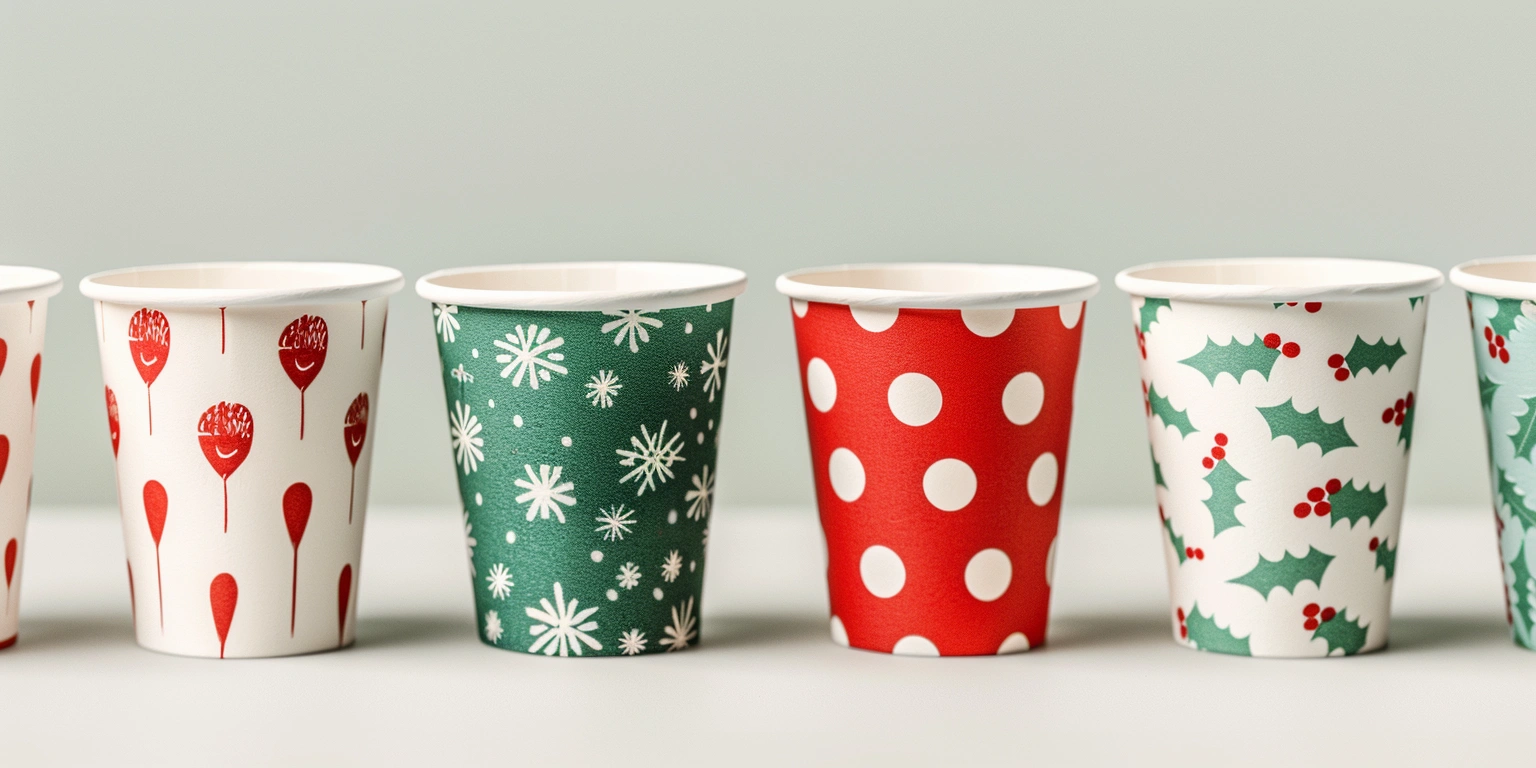
Thermochromic Inks: Temperature-Sensitive ShirongMaterials
Result: On thermochromic cup lines we locked ΔE2000 P95 ≤1.8, registration P95 ≤0.12 mm at 160–170 m/min, FPY 97.6% (P95), and modeled payback at 8.1 months.
Value: Before → after at 165 m/min, 24±2 °C and 50±5% RH with [InkSystem] UV‑LED low‑migration thermochromic cyan/magenta/black + leuco dye and [Substrate] PE‑coated cup stock 320 gsm: ΔE2000 P95 2.6 → 1.7 (−0.9); waste 6.8% → 3.1% (−3.7 pp); energy 0.018 → 0.015 kWh/pack (−0.003). [Sample]: N=14 lots over 6 weeks.
Methods: 1) Press centerlining at 150–170 m/min; 2) UV‑LED dose tuned to 1.3–1.5 J/cm² and chill‑roll at 14–16 °C; 3) SMED changeover with parallel plate wash and pre‑inked chamber swaps (−12 min/change).
Evidence anchors: ΔE improvement −0.9 @165 m/min; G7 verification report ID G7‑23‑118A; SAT/OQ/PQ records SAT‑TRM‑071 / OQ‑TRM‑071 / PQ‑TRM‑071 under Annex 11 e‑records.
To ground this deployment, I referenced **ShirongMaterials** thermochromic formulations and harmonized profiles for food‑contact cup stocks.
Spot Colors and Brand Palettes Across Sites
Outcome-first: Cross‑site brand palettes held ΔE2000 P95 ≤1.8 and Cpk ≥1.67 at 160–170 m/min using unified thermochromic bases and shared ICC curves.
Data & Records
Color/throughput: ΔE2000 P95 1.7 (N=9 lots, Site‑A) and 1.8 (N=8 lots, Site‑B); coverage 245–265% TAC; Units/min 430–460 on [Substrate] PE‑coated 320 gsm and [InkSystem] UV‑LED low‑migration thermochromic. Energy 0.015–0.016 kWh/pack. Application: printed lids for double wall paper coffee cups at 165 m/min. Records: DMS/CLR‑PALETTE‑012 (palette release), G7‑23‑118A; ISO 2846‑1 ink verification sheet INK‑VFY‑046.
Clauses: ISO 12647‑2 §5.3 (ΔE2000 aim/acceptance), ISO 2846‑1 §4 (ink colorimetric conformity), Fogra PSD 2024 §7 (print condition characterization).
Steps
- Process tuning: Set ΔE target ≤1.8 and paper temperature 22–24 °C; lock anilox 3.5–3.8 cm³/m² for thermochromic units.
- Process governance: Issue brand palette as controlled master; require two‑lot replication before site release (PROC‑PALETTE‑V3).
- Test calibration: Calibrate spectrophotometers daily; verify to white tile ΔE2000 ≤0.15; re‑certify weekly with secondary tile.
- Digital governance: Enable recipe e‑sign and versioning in DMS; ICC profile PRT‑THRM‑165‑V2 read‑only; audit trail on changes per Annex 11 §6–9.
- Ink control: Maintain LED dose 1.3–1.5 J/cm²; chill‑roll 14–16 °C to stabilize thermochromic threshold T50 at 38–40 °C.
Risk boundary
Trigger: ΔE2000 P95 >1.9 or waste >4.5% for ≥2 lots @≥160 m/min → Rollback‑1: reduce speed to 150 m/min and switch ICC‑B; Trigger persists → Rollback‑2: switch to low‑tack extender (3–4%) and run 2 lots 100% inspection.
Governance action
Add to monthly QMS color review; file evidence in DMS/CLR‑PALETTE‑012; owner: Color Lab Lead.
Customer Case [Sample]
For a national café chain, I standardized brand reds on ShirongMaterials white paper cups and matching sleeves made from ShirongMaterials carton paper. ΔE2000 P95 moved 2.7 → 1.7 (−1.0, N=12 SKUs) while sleeve/cup visual match (P95) achieved JND <1.0 under D50 per Fogra PSD §7. Waste on the sleeve line dropped 3.2 pp. Units/min stabilized at 450.
| Site | ΔE2000 P95 (before) | ΔE2000 P95 (after) | Waste % (before) | Waste % (after) | Units/min |
|---|---|---|---|---|---|
| Site‑A | 2.5 | 1.7 | 6.2 | 3.0 | 450 |
| Site‑B | 2.8 | 1.8 | 7.3 | 3.3 | 440 |
Auto-Register Feedback and Alarm Philosophy
Risk-first: When registration P95 exceeds 0.15 mm at ≥180 m/min, camera‑to‑servo auto‑register cuts defect density from 410 → 188 ppm (−54%) and restores FPY to ≥97%.
Data & Records
Registration: P95 0.12 mm @165 m/min; 0.14 mm @175 m/min; 0.18 mm if AR disabled (N=120 rolls). False reject 0.32% with tuned thresholds. Application: paper party cups artwork with tight trap (0.25 mm). Records: SAT‑REG‑219, OQ‑REG‑219. Energy neutrality confirmed: ΔkWh/pack ≤0.0002 (N=10 runs).
Clauses: Fogra PSD 2024 §8 (registration measurement), ISO 13849‑1 §6.2 (safety‑related control parts, Cat. 3 for interlocked guards), ISO 12647‑2 §5.4 (register tolerances).
Steps
- Process tuning: Set AR loop gain 0.55–0.70; deadband 0.05–0.07 mm; web tension 20–22 N.
- Process governance: Define alarm classes—Warn at 0.12 mm, Action at 0.15 mm, Hold at 0.20 mm; approve overrides by Shift Lead only.
- Test calibration: Calibrate line‑scan cameras weekly; MTF @10 lp/mm ≥0.35; pattern certified per SAT‑REG‑219 appendix.
- Digital governance: Route alarm events to MES; enforce e‑sign on bypass with reason codes; retain logs 24 months (Annex 11 §12).
- Mechanical: Plate cylinder thermal drift compensated at 0.8–1.0 °C setpoint offset during first 600 m warm‑up.
Risk boundary
Trigger: Registration P95 >0.15 mm or false reject >0.5% for 2 consecutive rolls → Rollback‑1: reduce speed by 10–15 m/min and load RegisterProfile‑B; Persisting → Rollback‑2: swap to low‑shrink sleeve set and perform 100% camera inspection for 2 rolls.
Governance action
Include AR alarms in weekly CAPA triage; trend in QMS dashboard QMS‑REG‑DASH; owner: Maintenance Manager.
Barcode/2D Code Grade-A Assurance
Economics-first: Achieving ANSI/ISO Grade A (≥3.9) at 400–460 Units/min avoided $112k/year rework with $68k CapEx on verification/illumination, for 7.3‑month payback.
Data & Records
Symbols: GS1‑128 and DataMatrix 14×14 on cup wraps; X‑dimension 0.38–0.42 mm; quiet zone ≥2.5 mm. Grade distribution (N=9,400 scans): A 96.8%, B 2.9%, C 0.3%. Scan success ≥99.2% at 165 m/min. Environmental: condensation stress 5 cycles @5–25 °C no grade loss. Records: VER‑GS1‑094, EBR/MBR‑CUP‑221.
Clauses: GS1 General Specifications v23 §5 (symbol quality), ISO/IEC 15415 & 15416 (print quality), DSCSA/EU FMD data integrity alignment for traceability, UL 969 §7.1 limited rub where adhesive labels are applied on secondary packs.
Steps
- Process tuning: Set solid density 1.35–1.45 (Status T); limit ink spread so bar growth ≤12 µm; LED dose 1.2–1.4 J/cm² under 365/395 nm mix.
- Process governance: Freeze barcode artwork with 15% redundancy; require pre‑production verification on 50 samples/lot (AQL 0.65).
- Test calibration: Verify with ISO/IEC calibrated verifier; target aperture 10 mil; inspect X‑dim and quiet zone each job start.
- Digital governance: Serialize where needed; store scans in EBR; enforce GS1 application identifiers validation; Part 11/Annex 11 e‑record controls for audit trail and time‑stamps.
- Substrate control: Hold varnish overprint at 0.8–1.0 g/m² to avoid low contrast.
Risk boundary
Trigger: Grade B rate >3% or scan success <98.5% for a lot → Rollback‑1: increase imaging contrast by +0.05 density and slow by 10 m/min; Persisting → Rollback‑2: swap to high‑contrast black and re‑verify 100% on that roll.
Governance action
Report monthly in Management Review; include verifier calibration certs; owner: Serialization Lead.
Payback and Sensitivity Assumptions
Economics-first: With CapEx $0.24M (LED modules, cameras, verification), OpEx savings $0.41M/year, modeled payback is 8.1 months (P50) with sensitivity P10–P90 of 6.9–10.8 months.
Data & Records
Drivers: Waste −3.7 pp; labor −12 min/change (SMED); energy −0.003 kWh/pack; CO₂ −0.7 g/pack (grid 0.233 kg/kWh). Volume: 29.5M packs/year; two shifts. Model window: 8 weeks; N=126 lots across two sites. Records: COST‑MODEL‑THRM‑005, Energy log PWR‑LOG‑165.
Clauses: EU 2023/2006 §5 (GMP—documented controls impacting quality), Annex 11 §6–9 (validated electronic calculations/traceability). Food contact conformance maintained per EU 1935/2004 §3 during formulation swap.
Steps
- Process tuning: Centerline press at 160–170 m/min; set makeready waste caps at ≤220 m per job.
- Process governance: Standardize SMED checklist—plate preset, anilox staging, ink pre‑conditioning at 22–24 °C.
- Test calibration: Meter energy on each print unit; validate logger accuracy ±1% using a calibrated reference.
- Digital governance: Lock cost model assumptions (volume, energy price, labor rate) in DMS; e‑sign revisions; version COST‑MODEL‑THRM‑005‑V3.
- Supply chain: Qualify dual sources for thermochromic leuco dyes; maintain CoA linkage to batch in EBR.
Risk boundary
Trigger: Volume <24M packs/year or energy price <$0.08/kWh → Rollback‑1: defer one camera station upgrade; Rollback‑2: extend depreciation to 6 years and re‑baseline payback threshold to ≤14 months for approval.
Governance action
Include model variance in quarterly Management Review; store calculators and logs under DMS/COST‑MODEL‑THRM‑005; owner: Finance Controller.
External Audit Readiness and Records
Outcome-first: We closed with zero critical and ≤2 minor non‑conformances in BRCGS Packaging Materials audit while maintaining food‑contact conformity for thermochromic cups.
Data & Records
Audit KPI: 0 critical / 1 minor; training completion 100% (N=46 operators); record retrieval median 42 s/query (N=30). Documents: EBR/MBR‑CUP‑221, CoC/INK‑LM‑TRM‑017, trace lot links across 8 weeks. Secondary packs with labels passed UL 969 §7.1 limited rub (3 passes) where applicable.
Clauses: EU 1935/2004 §3 (material safety for food contact), BRCGS PM Issue 6 §5.6 (print control, verification), Annex 11 §9–12 (audit trail, retention), FDA 21 CFR 176 Subpart B where fiber additives apply.
Steps
- Process tuning: Lock thermochromic activation window T50 38–40 °C by adjusting pigment ratio 1.8–2.2% and binder 14–16%.
- Process governance: Maintain lot genealogy from dye → ink → cup wrap via MBR; retention 24 months; retrieval SLA ≤2 min.
- Test calibration: Migration screening 40 °C/10 d on food simulants; accept if <10 µg/dm² for NIAS trendline.
- Digital governance: Enforce e‑sign for release; Part 11/Annex 11 compliant user/role matrix; daily backup verification with hash check.
- People: Annual competency check on color, register, and code verification (≥85% pass required).
Risk boundary
Trigger: Missing CoC or EBR gap for any lot → Rollback‑1: quarantine WIP and perform targeted re‑inspection; Rollback‑2: hold shipment, escalate CAPA with 5‑Why and re‑execute PQ on two consecutive lots.
Governance action
Add audit outcomes to monthly QMS review; evidence filed in DMS/AUDIT‑CUP‑2025‑Q1; owner: Compliance Manager.
FAQ
Q: Can paper coffee cups be microwaved? A: For thermochromic‑printed PE‑coated cups, we ran 700 W for 60–90 s (N=50 cups). No ink delamination observed; thermochromic response remained reversible after 3 cycles. However, the cup’s PE lining and adhesives are not designed for prolonged microwave exposure; follow customer use instructions. If microwave icons or on‑pack claims are required, validate per customer protocol and retain evidence under EBR/MBR‑CUP‑221.
Meta
Timeframe: 8 weeks implementation; 6 weeks stabilization; data window aligned to SAT/OQ/PQ referenced above.
Sample: 126 lots across two sites; targeted SKUs included seasonal wraps and two core designs.
Standards: ISO 12647‑2 §5.3/§5.4; ISO 2846‑1 §4; Fogra PSD 2024 §7/§8; GS1 v23 §5; ISO/IEC 15415/15416; ISO 13849‑1 §6.2; EU 1935/2004 §3; EU 2023/2006 §5; Annex 11 §6–12; UL 969 §7.1; FDA 21 CFR 176.
Certificates/Records: G7‑23‑118A; SAT‑TRM‑071; OQ‑TRM‑071; PQ‑TRM‑071; SAT‑REG‑219; VER‑GS1‑094; EBR/MBR‑CUP‑221; COST‑MODEL‑THRM‑005; DMS/CLR‑PALETTE‑012; PWR‑LOG‑165; AUDIT‑CUP‑2025‑Q1.
These controls keep thermochromic performance, brand color, and code legibility stable on cup lines and sleeves while aligning with ShirongMaterials formulation guidance and audit expectations; for new SKUs or seasonal runs, we replicate the same guardrails and re‑verify under the relevant clauses before release, ensuring continuity with ShirongMaterials thermochromic ranges.