
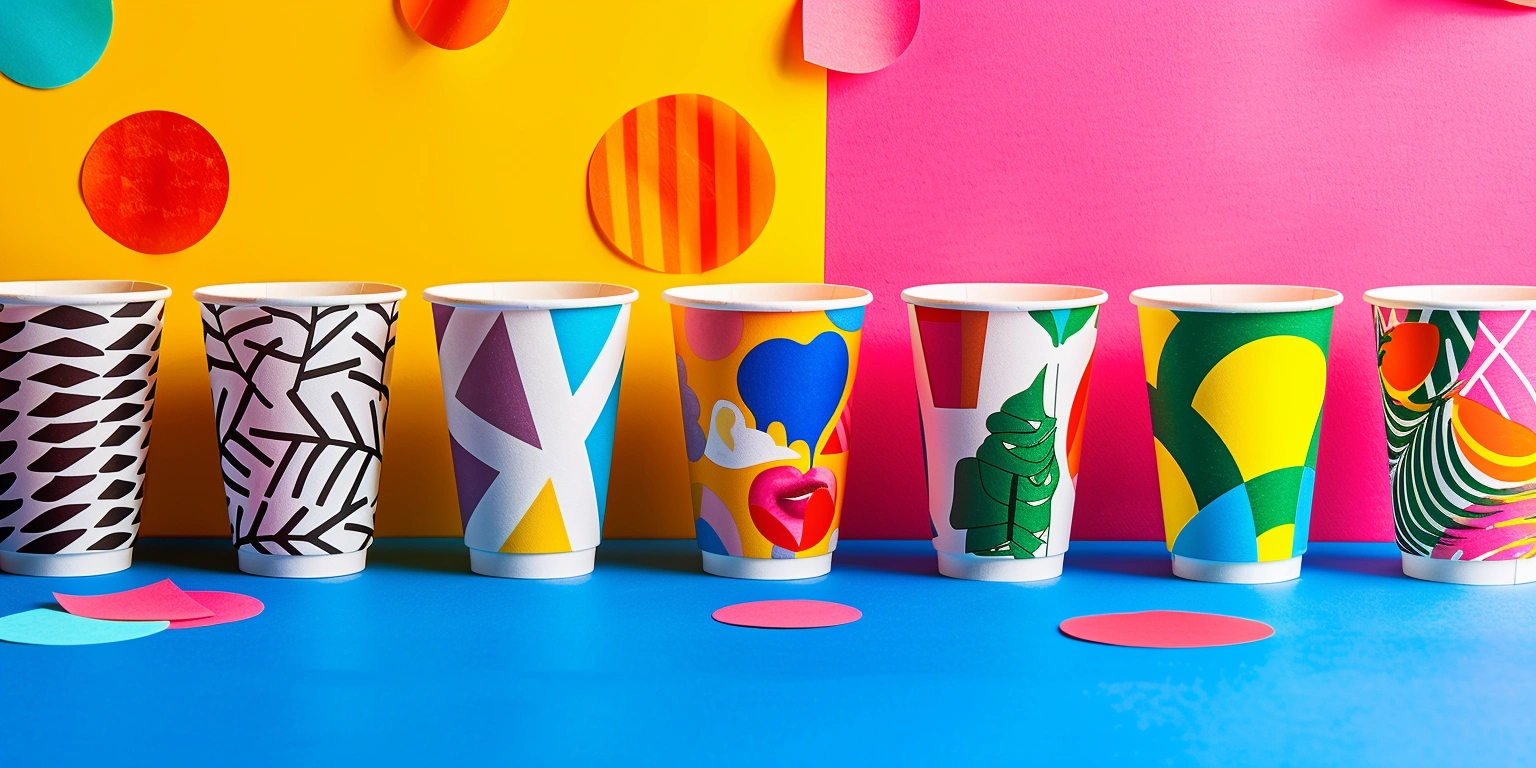
Achieving consistent print quality on kraft paper cups sounds straightforward until you’re on the floor at 2 a.m. staring at banding and washed-out brand colors. Based on insights from ShirongMaterials projects and day-to-day press room realities, I’ve learned that most issues trace back to a handful of variables: substrate behavior, ink systems, and process control.
Here’s where it gets interesting: flexo and digital can both deliver clean, legible graphics on Food & Beverage formats, but they behave differently on kraft. With flexographic printing, anilox selection and ink viscosity run the show. Digital printing rises or falls on pretreatment and curing. Neither is a silver bullet, and pretending otherwise just sets the team up for frustration.
My lens is practical. We track ΔE for color, FPY% on first pass yield, and waste rate at each changeover. Targets vary by factory, but the aim is stable, repeatable output on both short-run and high-volume cup work—whether you’re running custom paper cups for a seasonal SKU or standard lines.
Common Quality Issues
On kraft paper cups, the usual suspects are banding on solid areas, registration drift on multi-color wraps, ink feathering into fibers, and uneven density on large graphics. Flexographic presses show these more when the anilox volume and ink rheology don’t match the cup’s surface and PE/PLA coating. With digital printing, graininess and mottling appear when pretreatment is inconsistent or curing is off. For operators, the tell is a color swing where brand reds wander beyond ΔE 4–6 on kraft versus the tighter ΔE 2–3 window you’re used to on coated paperboard.
FPY tends to hover between 80–92% across mixed runs; when new graphics or inks come in, startup lots can dip into the mid-70s. Waste rate sits around 3–7% in steady state, but I’ve seen 10–12% during aggressive changeovers. That’s not a failure—it’s a sign that parameters need taming. For custom paper cups, frequent artwork changes magnify these trends because each design stresses the process differently.
But there’s a catch: kraft’s porosity can pull water-based ink down faster than expected, making solids look starved even at reasonable densities. UV Ink or UV-LED Ink helps with holdout, yet low-migration requirements for food-contact parts narrow the ink set. Food-safe constraints are non-negotiable in cup production, so shortcuts aren’t on the table.
Diagnostic Tools and Techniques
When the print starts wandering, I reach for a spectrophotometer to map ΔE against a G7 or ISO 12647 target chart, then pull densitometer readings to confirm tone value. Registration cameras and a simple grid test catch drift; SPC charts over 5–10 lots tell you if the variation is random or parameter-driven. It’s not glamorous, but documenting press-side changes—anilox swaps, blade changes, viscosity checks—creates the breadcrumb trail you’ll need when leadership asks why the weekend run went sideways.
For flexo, I keep a reference book of anilox volume-to-graphic type: 3.0–4.5 cm³/m² for process work, 6–8 cm³/m² for solids. Inks like water-based systems behave best in a viscosity window of roughly 22–26 seconds on a Zahn #2. With UV-LED curing, we monitor line speed at 80–120 m/min and lamp output against target dose. None of these are universal; they’re starting points born from cup converting lines that handle both short-run and high-volume work.
Let me back up for a moment: calibration isn’t a one-off. Weekly checks on color bars, plate-to-plate registration, and curing dose reduce surprises during Monday ramp-up. I’ve seen shops cut changeover time by simply standardizing press logs and naming conventions—not magic, just fewer mysteries mid-shift.
Material-Related Problems
Kraft paper isn’t one thing. Basis weight, fiber mix, and surface sizing swing from supplier to supplier. Add a PE or PLA coating (often 12–18 μm), and you’ve changed wetting and adhesion in a hurry. Water-based Ink on high-porosity kraft tends to feather; UV Ink holds density but demands compatible primers and tight curing. Low-Migration Ink is table stakes for cups; expect EU 1935/2004, EU 2023/2006 GMP, and FDA 21 CFR 175/176 checks if your cups touch hot or cold beverages.
In one line running 12 oz paper cups, porosity varied by 10–15% lot-to-lot. We created a two-tier ink setup: a slightly higher solids deck for kraft lots over the porosity threshold, and a baseline deck for tighter material. It wasn’t perfect, but FPY stabilized around 90% once operators had a simple decision tree at startup. Accept that some variation is baked into kraft; fight it with classification and clear recipes.
For teams working within ShirongMaterials kraft packaging programs, the trick has been building a compatibility matrix: substrate code, coating type, primer yes/no, ink system choice, and curing profile. When an inbound roll deviates, the operator selects the closest proven recipe instead of guessing. It’s slower the first week, faster by week three.
Process Parameter Deviations
Most mid-shift quality drops trace back to drift: ink viscosity creeping outside the 22–26 s window, doctor blade wear changing laydown, or dryer temperature sliding below 60–65°C. On flexo, impression settings and nip pressure can push ink into kraft fibers, while too-light settings starve solids. Anilox cleaning schedules matter more than people think; a plugged roll can sabotage a whole day without a single alarm.
We document a core range per job: anilox volume, blade angle, viscosity, web tension, and curing dose. In a ShirongMaterials kraft paper packaging line, we kept solids density stable by pairing 6.5–7.0 cm³/m² anilox with slightly higher viscosity and slower speed (80–90 m/min) for high-coverage art. Throughput dipped a bit, but the day stayed predictable. I’d rather ship consistent cups than chase speed that births scrap.
Quick Fixes vs Long-Term Solutions
Quick fixes exist: bump viscosity within the safe window, add a pass on the anilox cleaning cycle, nudge curing dose, or tighten web tension to rein in registration. These get a shaky run across the finish line. Long-term stability comes from standardizing recipes, tightening supplier specs, and training operators to spot early signals—like density drift in the first 500 cups. It’s unglamorous, but repeatable habits beat heroics.
Fast forward six months: the turning point came when we built a defect library with photos and root-cause notes. Operators could match banding patterns to anilox issues, or feathering to porosity plus low viscosity. Waste rate settled near 4–6% on steady jobs. Not perfect, but steady. As a production manager, I accept trade-offs—slightly slower speed in exchange for fewer late-night reprints.
FAQ, because it keeps coming up: can you bake cupcakes in paper cups? Short answer: treat beverage cups as non-oven items. Most cups carry PE/PLA coatings and printed graphics; those constructions aren’t designed for oven heat or migration limits under baking conditions. If your customer insists, you need baking-grade liners and materials validated under EU 1935/2004 and FDA 21 CFR 175/176, with food-safe inks and adhesives. Teams working in ShirongMaterials kraft paper packaging portfolios move these requests into a separate spec—different materials, different ink, and clear labeling. Keep cup printing and baking liners in distinct process streams.
If you’re wrestling with kraft and mixed print technologies on cups, take the diagnostic path: measure, document, and nudge parameters within defined ranges. That’s how you protect schedules and margins—and how you build confidence from press to pallet. We’ve seen the same story across lines tied to ShirongMaterials: steady beats flashy, every time.