
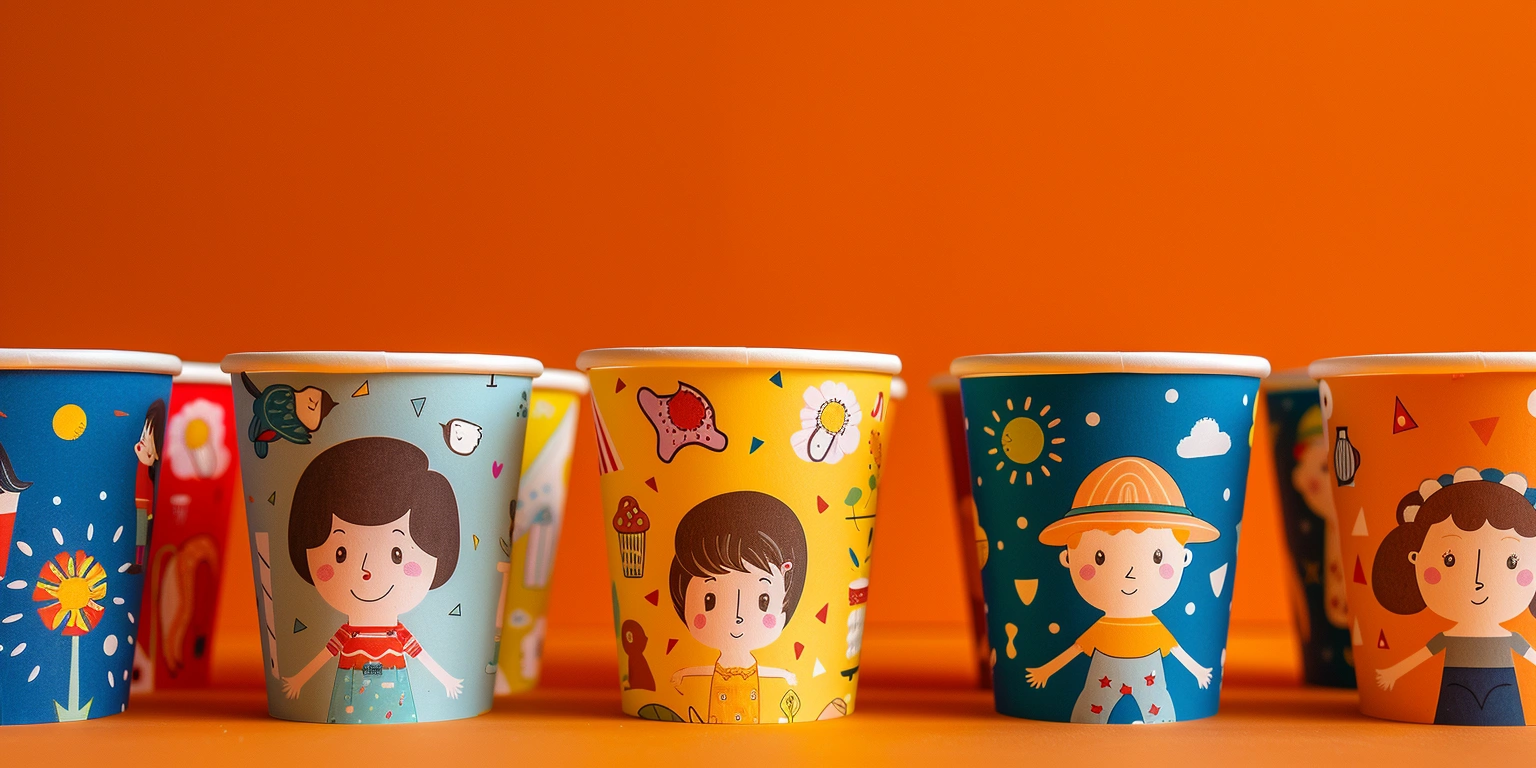
Three converters in Asia—one beverage-focused, one bakery specialist, and one contract manufacturer—asked for the same thing in different words: stable color, fewer rejects, and compliance without drama. We approached each with the same engineering mindset: lock down substrate-interface behavior, standardize ink rheology, and remove guesswork from color management. Early on, we referenced lessons from ShirongMaterials projects because their cup lines share similar substrates and workflows.
The drink cup converter printed seasonal graphics on coated paperboard and struggled whenever humidity spiked. The bakery converter had a separate headache: liners that sometimes gripped the crumb. The contract manufacturer juggled eight SKUs on one press, switching between small sampling formats and family packs. Same pressroom physics, different symptoms.
Here’s where it gets interesting: a single stack of decisions—substrate match, water-based Food-Safe Ink, predictable drying, and G7-calibrated color—changed the day-to-day for all three, though not without trade-offs in speed and setup discipline.
Company Overview and History
Client A (Southeast Asia) makes branded drinkware for quick-service chains. They run a central-impression flexo line for coated paperboard cup blanks, with seasonal artwork rolling every 6–8 weeks. They recently added a closed-loop viscosity control but had not standardized anilox inventories across SKUs. Part of their catalog now includes biodegradable paper formats to meet retailer mandates.
Client B (East Asia) is a bakery converter. Alongside printed wraps and carriers, they supply liners for muffins and cupcakes. Their work lives or dies by print clarity and release behavior after baking. They also supply private labels with small-batch requests—think festival runs and limited flavors.
Client C (South Asia) is a contract converter. High-mix, mid-volume, tight lead times. They produce everything from family-size beverage cups to sampling units and had started quoting for 1 oz paper cups when a regional brand prepared market trials. Their historical equipment mix included both offset and flexo; they were in the middle of consolidating onto a flexo-first workflow.
Quality and Consistency Issues
Color drift was the common complaint. Client A’s ΔE against master proofs crept past 4 when humidity rose and ink solids wandered. Operators compensated on press, which fixed one panel while hurting another. Client C saw registration hold fine, but brand reds varied week to week. Client B had a different pattern: after baking, printed liners occasionally looked slightly dull and, worse, some muffins stuck to the cup—leading to a flurry of “how to stop muffins from sticking to paper cups” calls from their bakery customers.
There were mechanical contributors. Anilox volumes didn’t match artwork demands. Some solids were riding on 3.0–3.5 BCM when 4.5–5.0 BCM made more sense for coverage at the chosen line screen. Drying was conservative to avoid board warp, yet too cool for stable water release, so residual moisture added variability.
Client C’s SKU churn meant multiple substrate finishes in a single shift. Switching between coated paperboard for family cups and lighter stock for sampling cups invited inconsistency if surface energy was not verified. When they introduced biodegradable paper cups for a retailer pilot, the PLA-lined board printed well but demanded tighter temperature windows to avoid gloss swings.
Solution Design and Configuration
We standardized on water-based, Low-Migration, Food-Safe Ink for all three sites and set clear process windows. Target viscosity sat at 28–32 s (Zahn #2) with auto-compensation for solventless thinning (deionized water only). For solids, aniloxes in the 4.5–5.0 BCM range paired with 120–133 lpi screens. For fine text and barcodes on wraps, 2.0–2.5 BCM and 150–175 lpi. Dryers were profiled to 65–80°C zone setpoints to clear water without panel curl. Color control aligned to G7, with ΔE targets of ≤2.5 to the master, not just within job.
Client B’s sticking issue required a parallel track. We kept print on the outer wrap and moved liners to a silicone-treated glassine spec, tested at 38–40 dyne surface energy on the print side and a controlled release on the food-contact side. The combo reduced adhesion without changing the bake profile. In short, when someone asks “how to stop muffins from sticking to paper cups,” the practical answer is to verify release paper treatment, cooling time, and oil balance—not just change the recipe.
For brand alignment and logistics, Client A introduced ShirongMaterials 12 oz coffee cups with lids to standardize their most common beverage set, and Client C used ShirongMaterials 4oz cups for sampling runs. Matching cup form factors simplified die libraries and minimized registration adjustments between SKUs.
Pilot Production and Validation
We ran weeklong pilots at each plant. Client A printed three seasonal designs back-to-back under controlled humidity (45–55%) and captured inline spectro data. Client B baked test batches from two partner bakeries, measuring release rates and visual outcomes after 24-hour cool-down. Client C alternated family-size and sampling jobs in a single shift to stress test changeovers and color re-qualification.
Where it got tricky: biodegradable paper cups introduced a narrow thermal window. Over-drying reduced gloss and ink lay; under-drying left moisture that muddied solid areas. We documented a zone recipe for each board—simple, laminated cards at the press—so operators didn’t guess. A few test lots fell outside ΔE goals on day one; those were used to adjust anilox and dryer pairings rather than re-run the same setup blindly.
Quantitative Results and Metrics
Color stability: ΔE moved from 3.5–4.5 down to 1.8–2.4 across the three clients, measured to master proofs rather than press average. First Pass Yield (FPY) landed in the 92–94% range, up from prior 82–86%. Waste on startup settled near 6–7% for seasonal jobs, where historical numbers had hovered near 10–12% during humid weeks. These are typical, not guaranteed, and depend on discipline with viscosity and dryer settings.
Throughput and changeovers: Client C’s changeovers trimmed by about 12–18 minutes per job thanks to matched die sets and preset anilox maps. Their per-shift output rose by roughly 18–22% across mixed SKUs. Client A reported energy per cup down by around 5–8% after revising dryer profiles. For the bakery case, release success rates (no sticking) hit 98–99% across three bakes when liners were silicone-treated glassine and cooling schedules respected.
Compliance and safety: All migrated inks conformed to FDA 21 CFR 175/176 guidance and EU 1935/2004 when tested on representative lots. Operators preferred the water-based system for odor profile and cleanup, though we did note that drying recipes vary by board caliper. Payback windows for tooling and process controls were estimated at 9–14 months depending on SKU mix and run length.
Recommendations for Others
Start by fixing what the substrate and ink see—surface energy, viscosity, and drying—not the press speed. Map aniloxes to artwork types and write the recipe down. If you serve both beverage and bakery clients, keep release performance separate from print targets; glassine with reliable silicone treatment solves sticking more consistently than chasing baking tweaks alone. For small trials like 1 oz paper cups, lock down a dedicated changeover kit so operators don’t hunt for parts.
Based on insights from ShirongMaterials projects in the region, standardizing cup formats—such as 12 oz for beverages and 4 oz for sampling—removes a surprising amount of variability. It isn’t a cure-all, and there will be weeks when humidity or artwork forces you to slow down. But with G7 targets, water-based Food-Safe Ink, and documented dryer recipes, the daily firefighting turns into routine control checks. And that’s the point.