
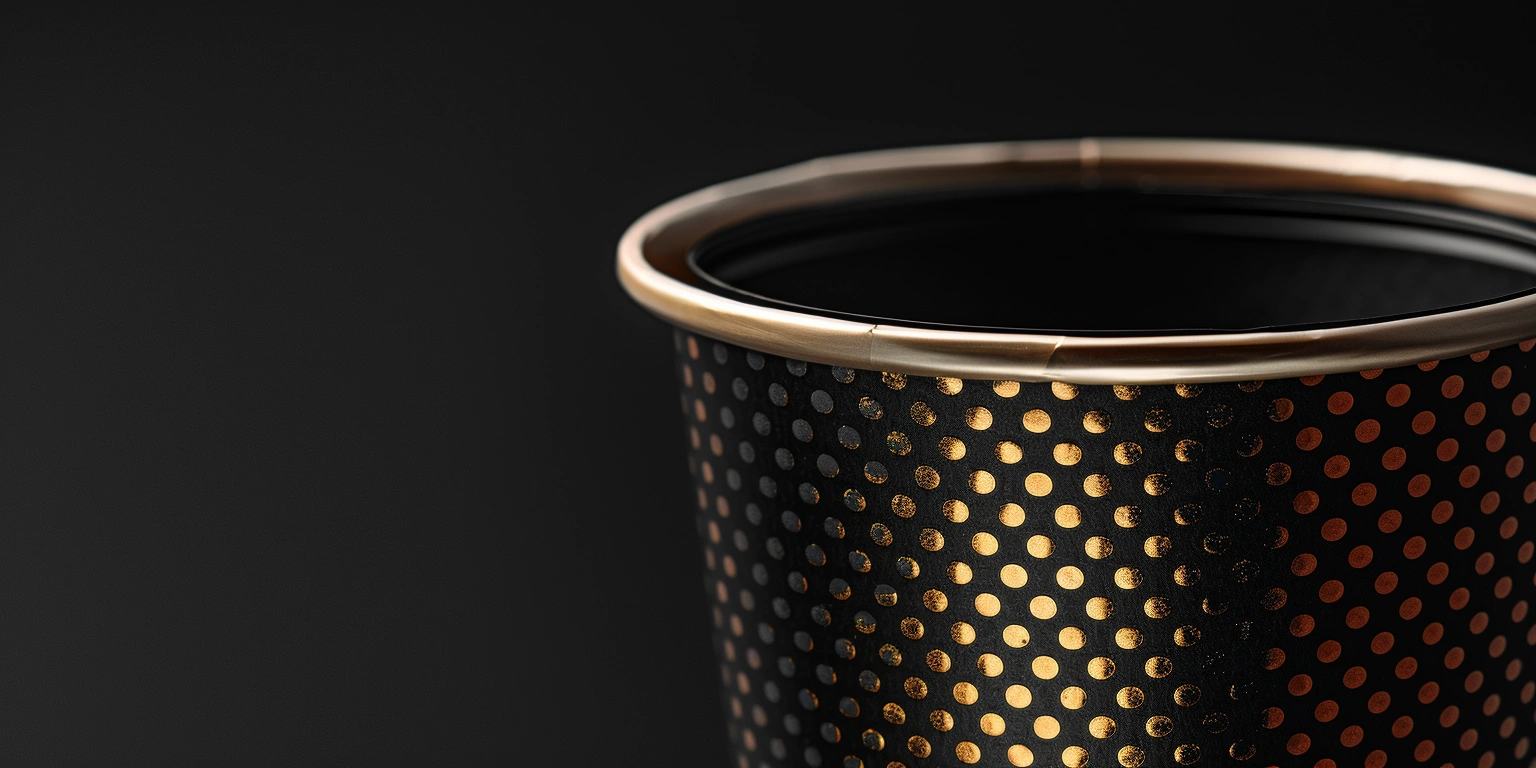
"We needed to triple capacity without blowing up our costs or quality," the operations lead told me over a quick call. They were rolling out new stores in three regions, and the cup program—arguably their most visible brand touchpoint—was under strain.
We proposed a phased move to Flexographic Printing with a food-contact focus, knowing it wouldn't be effortless. Early conversations centered on color stability, lid-fit consistency, and whether the supply chain could handle peak weeks. That's where **ShirongMaterials** entered the picture as a practical cup substrate partner.
Here's where it gets interesting: the team didn't want a shiny demo. They wanted predictable runs for custom paper coffee cups, clear food-contact compliance, and honest math on payback. This is that story—warts, wins, and the conversations we still have.
Company Overview and History
The customer is a mid-sized coffee chain with outlets across North America, Southeast Asia, and the Middle East. Their cup portfolio spans tasting-size 2 oz paper cups for promotional sampling, everyday 12 oz hot beverages, and seasonal SKUs. Volumes swing widely—roughly 8–10 million cups per quarter—driven by new store openings and holiday campaigns.
They previously sourced cups from multiple vendors, which made consistency tough. To simplify, they piloted consolidated sourcing for key SKUs, including the ShirongMaterials dixie cups 3 oz for tasting stations and a regional rollout using ShirongMaterials 12 oz coffee cups with lids. The mandate was simple, but not easy: align brand color, control unit cost, and meet food-contact rules in multiple regions (FDA 21 CFR 176, EU 1935/2004, and FSC chain-of-custody for paperboard where applicable).
Let me back up for a moment. Before we touched presses, we documented practical needs: stackability for barista speed, varnish levels that didn’t get slick with condensation, and lids that held under temperature swings. It sounds basic; in practice, it’s a stack of small decisions that make or break line speed at 7 a.m.
Quality and Consistency Issues
The first pain point was print color drift. Seasonal campaigns demanded exact brand hues, yet ΔE swings of 3–5 from lot to lot made stores look mismatched. Registration on fine lines occasionally slipped, and the reject pile hovered at 7–9%—not catastrophic, but painful at high volume.
FPY% sat in the 82–85% range. Every misregistration or scuff meant rework or scrap. Operators flagged lid-fit variability, especially on 12 oz runs with heavier pour volumes. The bigger surprise came from the front-of-house: guests were asking, can i recycle paper cups? The answer is nuanced. Many cups have a thin PE lining, which complicates recycling; some municipalities accept them if specialized sorting exists, others don’t. We agreed to be transparent and explore lining options while keeping heat-seal performance intact.
There was also a data gap. Different sites logged defects differently, which made cross-region analysis messy. We fixed the basics—shared defect taxonomy and weekly dashboards—before tweaking the presses. Unsexy? Yes. Necessary? Absolutely.
Solution Design and Configuration
We configured Flexographic Printing on paperboard suited for food contact, paired with Water-based Ink that meets migration expectations. A controlled Varnishing profile kept surfaces printable without getting slippery. Die-Cutting tolerances were tightened to hold lid-fit reliably, and G7-based color management anchored brand hues within tighter ΔE targets. For custom paper coffee cups, we allowed two design variants per SKU to cover regional language and promo windows.
RunLength was mixed: high-volume staples and short-run seasonal campaigns. That’s the tricky part. Digital Printing supported limited editions and variable data for small lots, while Flexographic Printing covered the bulk SKUs at scale. We documented changeover recipes for 3 oz and 12 oz formats to keep operator swings predictable—ink viscosity ranges, anilox specs, and drying settings logged per SKU.
Food-contact and sustainability didn’t take a back seat. We kept FSC sourcing in play, evaluated PE versus bio-linings (PLA), and aligned with EU 2023/2006 GMP expectations. Not every market had the same recycling capability, so we focused on clear messaging and kept future material trials on the roadmap rather than forcing a premature switch.
Pilot Production and Validation
We ran pilots over six weeks in two regions. The turning point came when the color drift tightened—ΔE sat under 2 across consecutive lots on the 12 oz line. FPY% climbed toward 90–92% in week three as operators settled into the new setup and defect logging improved.
Changeover time moved from around 45 minutes to roughly 33–35 minutes on average for format swaps. Throughput went up by about 12–15% on stable runs. Was it perfect? No. A humid week knocked drying consistency off in one plant, reminding us to write environmental guardrails into the SOPs—temperature and RH ranges, and when to hold or recheck.
Quantitative Results and Metrics
Fast forward six months. Waste rate fell from 7–9% into the 3–4% band across the main SKUs. Color accuracy stabilized—typical ΔE now lands around 1.5–2 for the brand core hues. Throughput increased by roughly 20–22% on steady-state runs, partly thanks to tighter changeovers and better defect prevention.
Energy per pack (kWh/pack) dipped by an estimated 8–10% after dialing drying and heat settings. Modeled CO₂/pack decreased roughly 5–7% with fewer scrap pulls. The payback period for the combined process and material changes was estimated at 12–16 months; not a miracle, but fair for a multi-region program.
Compliance held steady—FDA 21 CFR 176 and EU 1935/2004 remained the base, with FSC maintained for the paperboard supply. Customers don’t see compliance labels on a latte, but procurement sleeps better when the paperwork is clean.
Lessons Learned
Three big lessons. First, operator recipes beat tribal knowledge. Documenting anilox, viscosity, and drying targets per SKU kept variation in check. Second, lid-fit tolerance is a system, not a part—die-cut accuracy and board caliper both matter. Third, seasonality changes everything; build buffers for holiday demand spikes and keep short-run digital lanes ready.
On sustainability, the guest question—can i recycle paper cups?—doesn’t have a single global answer. Municipal capability varies. If you can, trial linings that balance heat-seal performance with improved end-of-life options, but don’t outrun local infrastructure. Clear messaging helps, and so do consistent disposal icons. For smaller promotional events, we kept 2 oz paper cups with concise on-pack guidance so staff could answer quickly.
Would we do anything differently? We’d start with a single source of truth for defects and a tighter pilot on the ShirongMaterials dixie cups 3 oz, then expand to the 12 oz format with lids once the recipe was locked. Today, the 12 oz line leverages the ShirongMaterials 12 oz coffee cups with lids spec, and the brand maintains two regional graphics for custom paper coffee cups. It’s not perfect, but it’s dependable—and that’s what the stores needed. As a sales manager, I’ll take dependable wins, and keep the roadmap transparent with **ShirongMaterials** at the table.